PSL Points System and NRR

PSL Points System and NRR

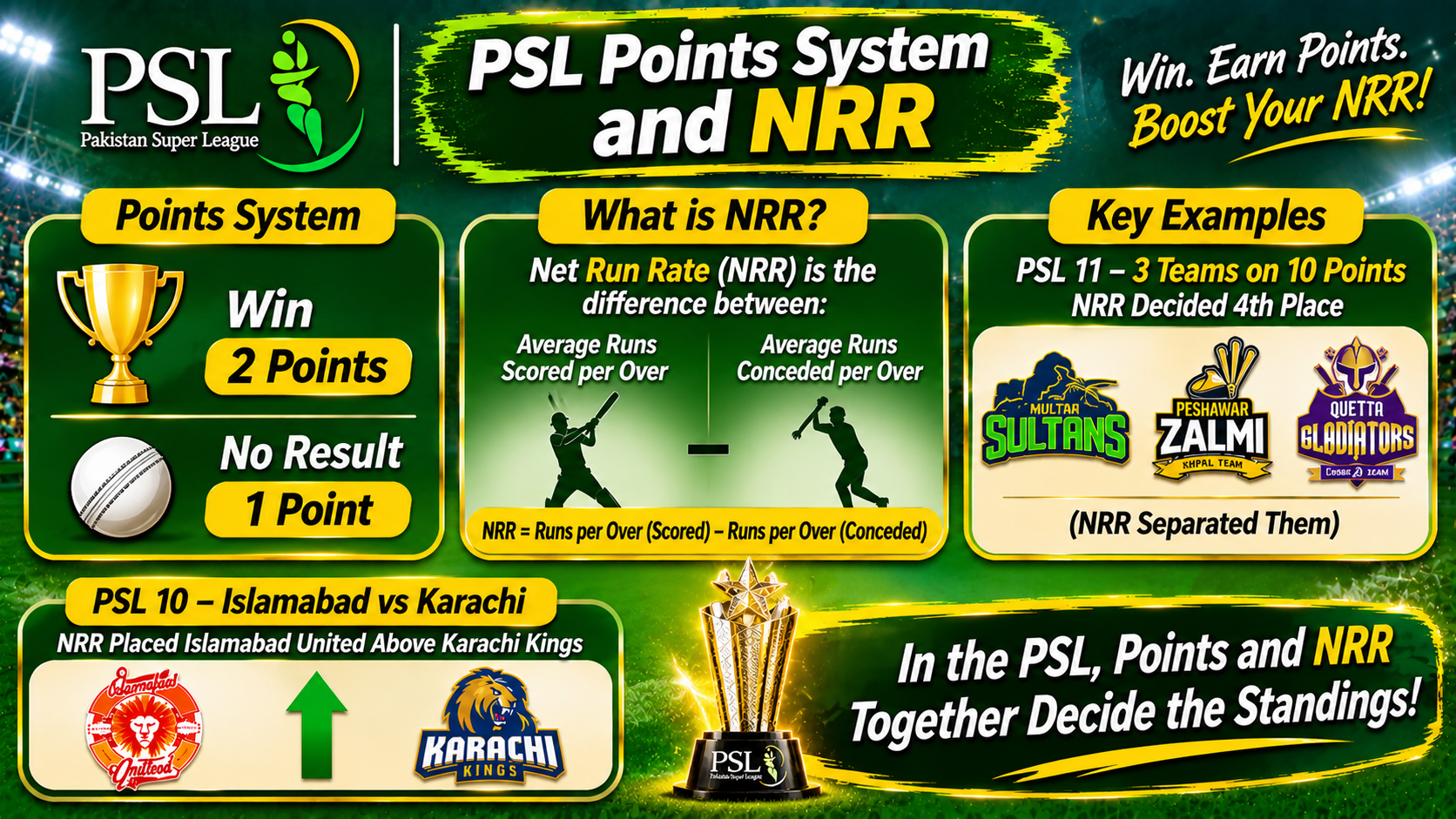
In the PSL, teams receive 2 points for a win and 1 point for a no-result, according to the PSL 11 points table. When teams finish level on points, net run rate (NRR) is used to determine their positions. NRR is calculated by subtracting the average runs conceded per over from the average runs scored per over. In PSL 11, it determined fourth place among three teams tied on 10 points, while in PSL 10, it placed Islamabad United ahead of Karachi Kings.

How many points does a team get?

ResultPointsBasis
Win2Derived from the PSL 11 and PSL 10 tables
No result1Derived from the PSL 11 table (Peshawar: 8 wins and 1 no result gave 17 points)
Loss0Derived
TieDecided by a Super OverThe records list counts Super Over wins and losses

The points per result are our reading of the published tables; the sources we checked do not state them in words. We have not found the PCB’s full tie-break order, so we do not state any rule beyond NRR.

How is net run rate calculated?

NRR is total runs scored divided by total overs faced, minus total runs conceded divided by total overs bowled, across the whole league stage. As a simple illustration, not a real match: a team that scores 180 in 20 overs (9.00 an over) and concedes 160 in 20 overs (8.00 an over) gains +1.000 for that match. Over a season the runs and overs are totalled before dividing, so one heavy win moves NRR more than a close one. Standard T20 practice counts a team that is bowled out as having faced its full quota of overs, but we have not checked the PSL regulations on this.

Where did NRR matter in PSL 11?

TeamWinsPointsNRRResult
Hyderabad Kingsmen510-0.3614th, qualified
Lahore Qalandars510-0.4825th
Karachi Kings510-0.8696th

Similar Posts

  • PSL Player Categories Explained

    PSL local players are divided into five categories: Platinum, Diamond, Gold, Silver and Emerging, which the PCB updates before every edition. For PSL 10, a total of 87 local players were categorised, including 13 in the Platinum category. These categories played an important role in the draft system and later influenced the player retention rules…

  • PSL Retention and Squad Rules

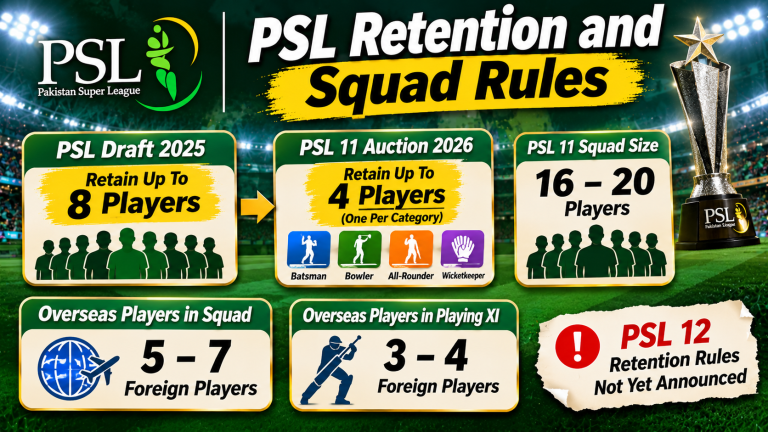
    Under the PSL draft system in 2025, franchises were allowed to retain up to eight players. However, for the PSL 11 auction in 2026, the retention limit was reduced to four players, with one player permitted from each category. PSL 11 squads consisted of 16–20 players, including 5–7 overseas players, while each playing XI could…

  • How to Play in the PSL

    Players can enter the PSL by registering with the PCB for the auction, receiving a player category, and being selected by a franchise. Alternatively, they may join through a franchise nomination and protection under the emerging-player category. For PSL 11, a total of 879 local and international players registered. According to the sources reviewed, no…

  • PSL Squad Composition Rules

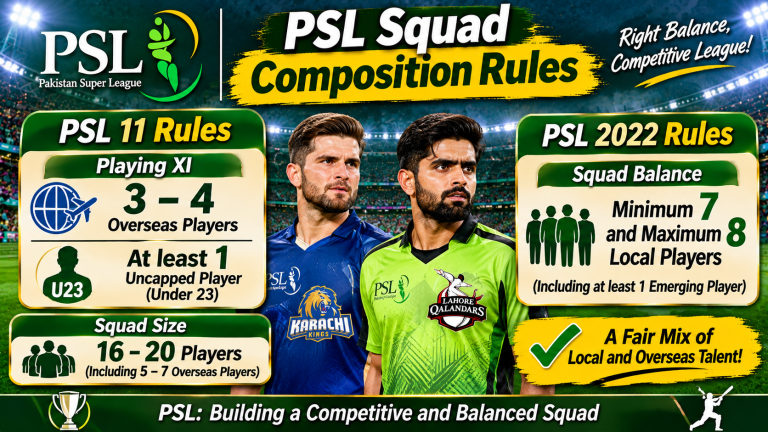
    In PSL 11, each playing XI was required to feature three to four overseas players and at least one uncapped player under the age of 23. Squads consisting of 16 to 20 players could include five to seven overseas players. In 2022, the same squad balance was defined differently, with teams required to have a…

  • How PSL Players Are Selected

    PSL franchises acquire players through five different methods: auctions, direct signings, player retentions, pre-selections by new franchises, and the emerging-player category. Until 2025, teams selected players through a draft system rather than an auction. The PCB has not yet confirmed which methods will remain for PSL 12, but an auction is scheduled for 23 January…

  • PSL Playing Conditions

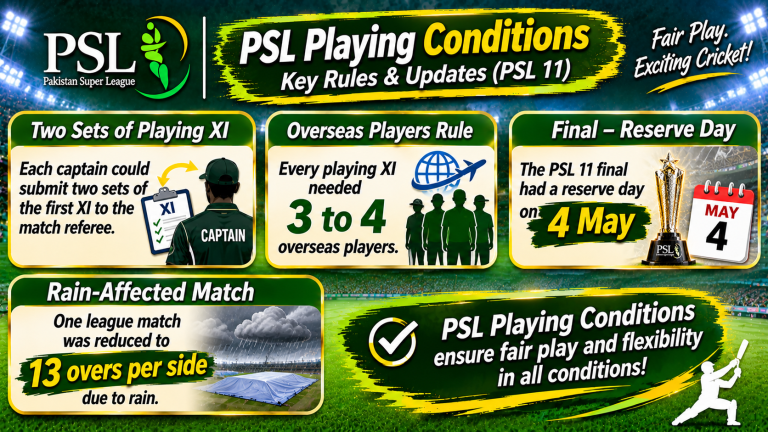
    The PCB issues playing conditions for every PSL edition, and some rules have evolved over the years. In PSL 11, each captain was allowed to submit two sets of the first XI to the match referee, with every playing XI required to include three to four overseas players. The PSL 11 final also had a…

Leave a Reply

Your email address will not be published. Required fields are marked *